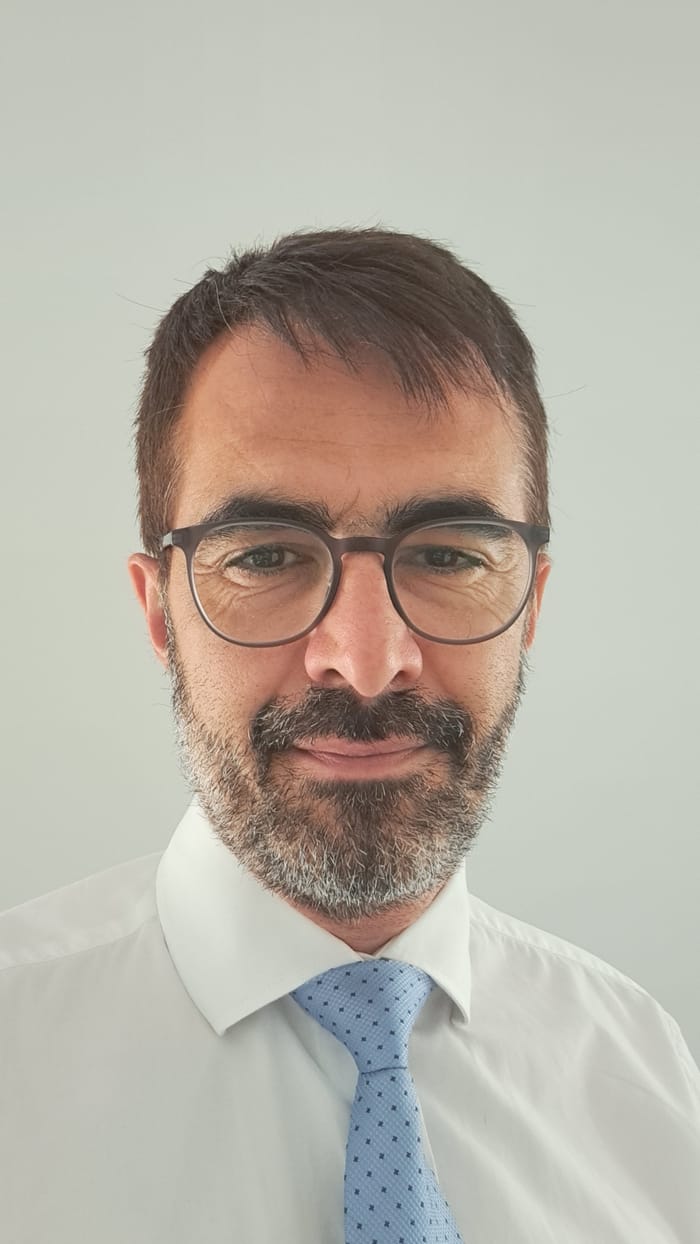
I’ve spent more than two decades working at the intersection of operations, technology, and strategy inside some of the world’s largest insurance groups, leading programs that span the full breadth of the organization: operating model redesign, post-merger integration, regulatory transformation, AI adoption, and the architecture of digital customer experiences. The work is inherently multidisciplinary — you can’t redesign how a company operates without understanding its technology, its people, and the assumptions baked into its processes. What unifies it all is a conviction that complex systems can be made to work better — and that the people leading the change need to understand the system deeply. What I find compelling, in every domain, is structure: understanding the underlying logic of a system well enough to know where it’s fragile and where there’s room to improve it.
But that drive didn’t start in a boardroom. It started with an engineering degree, a deep curiosity about how things are built, and a refusal to take systems at face value. AI became my latest obsession not through a PowerPoint on industry trends, but through textbooks on linear algebra and probability, through working out how models actually learn, how words become vectors in a space where meaning has geometry. That foundation makes me a more rigorous practitioner — and it reveals, frankly, how much of what gets called “AI strategy” in organizations is built on shaky foundations.
I’m also drawn to physics and pure mathematics, not for professional reasons, but because I find them beautiful. The same aesthetic that draws me to an elegant proof draws me to a well-designed operating model, a well-architected system, a well-composed piece of music, and a well-chosen route up a mountain.
Outside work, the mountains are where I go to reset. Hiking and trekking — the slow, physical accumulation of altitude — forces a kind of focus that’s hard to replicate elsewhere. I travel widely, with a particular interest in places where the beauty of nature is overwhelming. And music has always been a parallel discipline: from listening to playing piano, which I rediscovered a few years ago, and find in it something structurally similar to mathematics — pattern, constraint, and the occasional beautiful surprise.
None of what is described here would mean much without the people at the center of it. I am, above all, a husband and a father — and my family is the bedrock on which everything else stands.
This site is where those threads come together — professional rigor, technical curiosity, and strong passions.