I have traveled through the Dolomites extensively over many years, and in that time I have watched them change. The range stretches from the province of Trento, through the province of Bolzano in Trentino-Alto Adige, to the province of Belluno in the Veneto region, and on into Friuli Venezia Giulia, and every corner feels at once alike and distinct. Italian is spoken in some valleys, German in many others, and then there are the Ladin valleys, a linguistic and cultural layer of their own. They are mountains of a disarming beauty. I have seen a great many, but few as singular as the Dolomites.
These valleys are also heavily developed for skiing compared to other parts of the Alps, but thanks to the orography of the Dolomites, the lift systems have been built in a way that is far more compatible with the landscape. Except for places like Plan de Corones or the Alpe di Siusi, the lifts are usually spaced well apart and blend into the terrain, without the kind of visual damage seen, for instance, in parts of the Aosta Valley, where an entire mountain can be completely covered in ski infrastructure.
They are also, in a sense, extremely groomed mountains. Years ago, when I first started spending time there, the word that came to mind was perfection: immaculate meadows, exceptional hospitality, phenomenal organization. Over the years, though, I have watched that same organization drift toward a kind of luxury tourism, and it is precisely this shift that has cooled my affection for these places. What were once simple alpine refuges have turned into high-altitude restaurants. As a result, prices have adjusted to a wealthier clientele, often putting these places out of reach for many. This answers a real demand, particularly from international visitors, but it also ends up distorting the character of the mountain itself. For someone who goes to the mountains looking for the mountain, finding a restaurant serving oysters at two thousand meters does make you wrinkle your nose a little.
Unfortunately, my work only allows me to take holidays during peak season. I dream of the day when I will be able to return off-season and enjoy those valleys without suffering the effects of overtourism.
A strong tourist vocation also has its advantages, especially when traveling with children. Being able to promise them a playground waiting at the refuge is certainly more motivating than just the prospect of a plate of polenta with stewed meat. Wherever you go in South Tyrol, services for children are of excellent quality, something far harder to find in less touristy mountain areas.
Even from a tourist perspective, not all valleys are the same. While the Ladin valleys, however beautiful, have been over-developed for tourism, other valleys, such as Val di Funes, Alta Pusteria, or Val di Tires, still retain a more rustic charm that I find particularly appealing.
Map of the places
- 1 Val Gardena
- 2 Alpe di Siusi
1 Val Gardena ↑
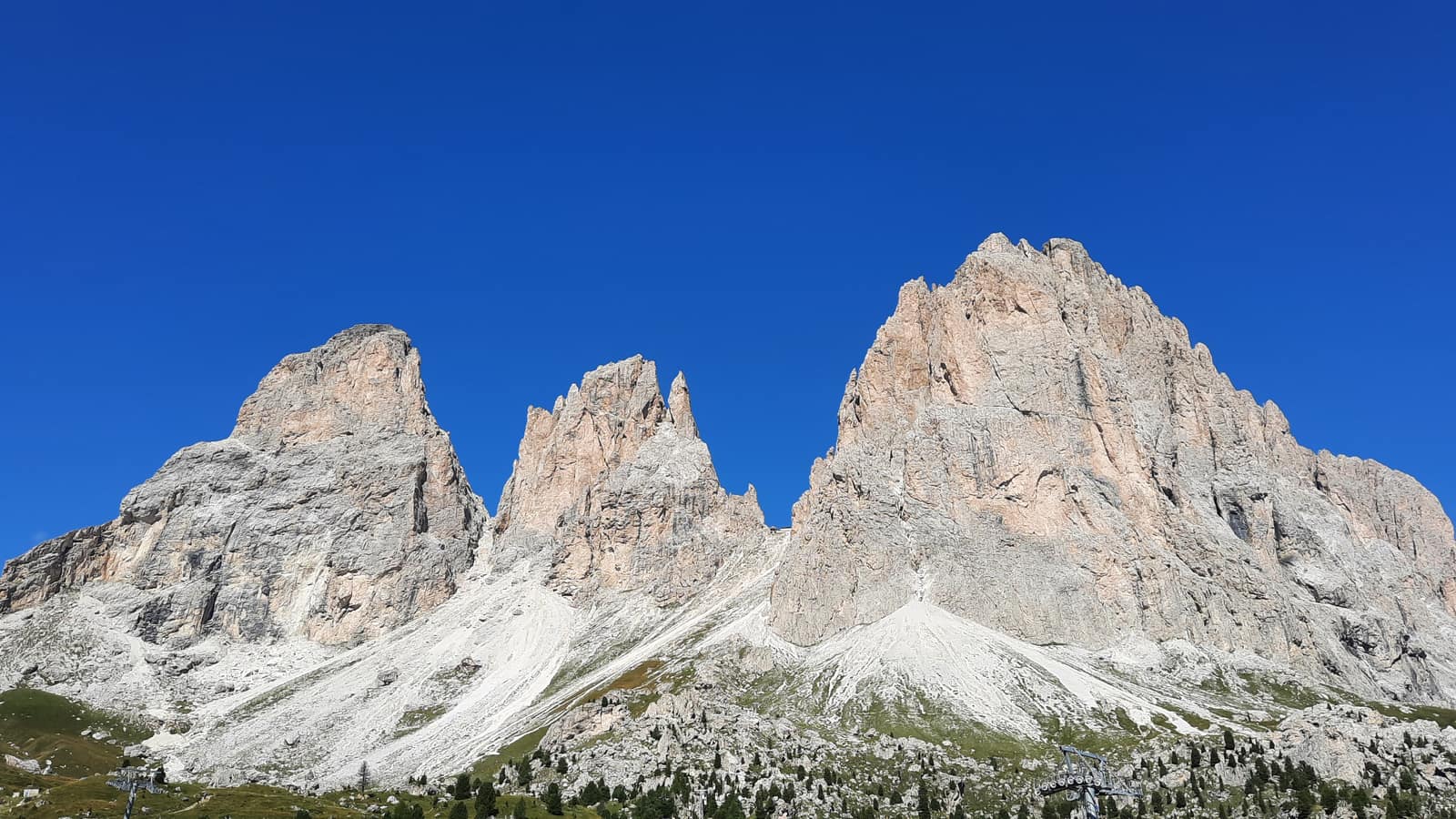
Coming from the south along the Brenner highway, Val Gardena is one of the easiest Ladin valleys to reach. It is a narrow valley, flanked on one side by the Odle group and on the other by the Sassolungo group and the Alpe di Siusi plateau. Along the road climbing from the Isarco valley toward Passo Sella, an almost too-perfect landscape unfolds through villages and ski runs that have made skiing history. Hospitality here is of the highest standard, the lift systems are as modern as they are expensive, and the mountains are worth seeing at least once in a lifetime. For my taste, though, it feels more like a destination for a luxury ski week than for a hiking holiday.
2 Alpe di Siusi ↑
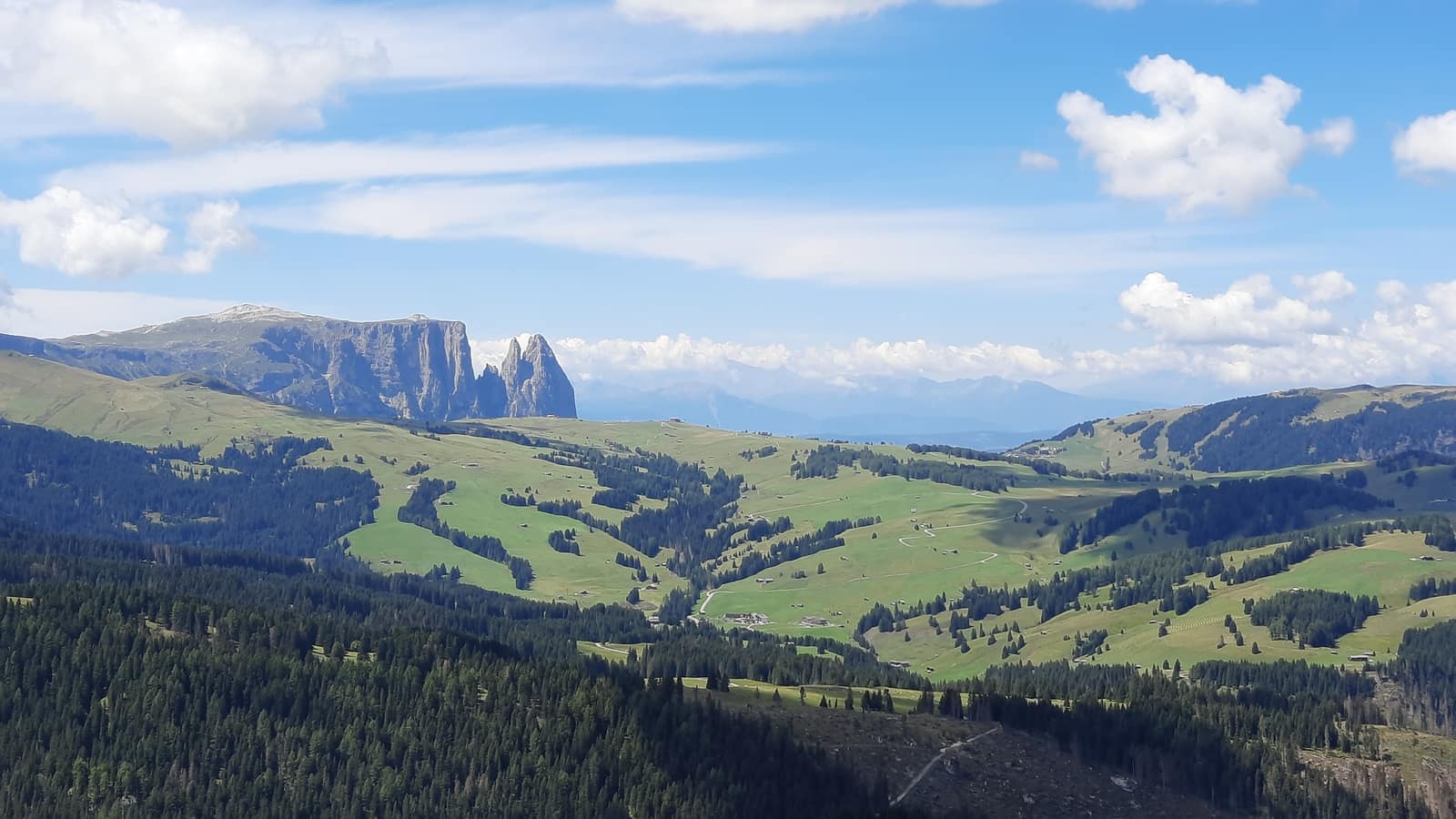
The Alpe di Siusi is a place that stirs conflicting emotions. The landscape is enchanting, with the Sciliar on one side and the Sassolungo group on the other: a vast plateau of rolling meadows and pastures, but also dotted with numerous ski lifts. It is a heavily developed place that, at first glance, reads as a pure tourist attraction, however extraordinary its beauty. Spend a little time there, though, and it reveals itself as a living place too, home to people who genuinely work the valley, for farming among other things. In late summer, in August for instance, a steady stream of tractors carries hay back to the barns, giving the place a sense of authenticity that goes beyond its tourist-facing surface.